
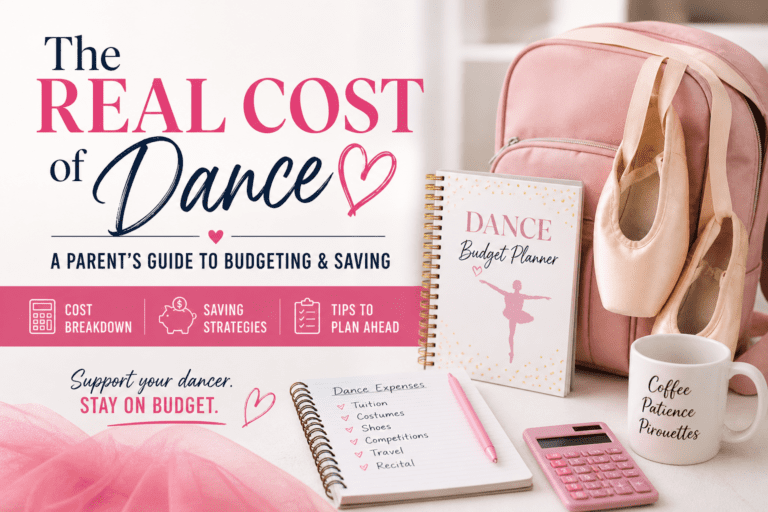
If you signed your dancer up for just one or two recreational classes and suddenly found yourself joining the competition team… you’re not alone.
Many parents don’t realize the true cost of dance until they’re already in the middle of a season. Dance is beautiful. It builds confidence, discipline, and lifelong friendships. But it can also be expensive—sometimes overwhelmingly so.
So how much is the cost of dance each year? The answer depends on your dancer’s level and commitments, but it can add up quickly.
The good news? With the right planning and mindset, you can support your dancer without putting your family under financial stress.
Let’s break it down.

💸 What is the Real Cost of Dance?
Here’s a realistic look at common dance expenses parents can expect:
1. Monthly / Recurring Costs
- Tuition (based on number of classes)
- Competition team fees
- Private lessons (if taken regularly)
2. Annual / Seasonal Costs
- Registration fees
- Costumes ($75–$150+ each, often multiple)
- Recital fees & tickets
- Competition entry fees
3. Gear & Essentials
- Dance shoes (and replacements throughout the year)
- Leotards, tights, warm-ups
- Hair & makeup supplies
- Dance bags & accessories
4. Competition & Travel Costs
- Hotel stays
- Gas or airfare
- Meals during travel
- Team apparel or studio merch
💡 Estimated Yearly Costs
- Recreational dancer: $800–$2,000/year
- Competitive dancer: $3,000–$10,000+/year
The cost of competitive dance can vary widely depending on how many routines, competitions, and extras your dancer participates in.
😓 Where Costs Add Up Fast (The “Sneaky” Expenses)
Even when you think you’ve planned ahead, these extra dance competition costs can sneak in:
- Last-minute shoe replacements
- Extra choreography or private lessons
- Dance conventions
- Photo/video packages
- Team bonding activities (these are great for building friendships and team connection, but they can add extra costs throughout the season)
These are often the biggest reason the cost of dance feels higher than expected.

💡 Smart Ways to Save on Dance
If you’re wondering how to afford dance, these strategies can make a big difference.
1. Be Strategic with Private Lessons
Private lessons are one of the fastest-growing dance expenses, but they don’t have to be overwhelming.
Just because privates are offered doesn’t mean you need to take all of them.
Ask yourself:
- What does my dancer actually need help with?
- Group choreography?
- Solo technique?
If multiple teachers offer privates:
- You don’t need to book with everyone
- Too many voices can confuse your dancer
- More isn’t always better—it’s just more expensive
👉 Budget privates intentionally—not emotionally.
2. Don’t Automatically Say Yes to Every Dance
If your dancer is offered:
- Multiple group dances
- Solos
- Duos/trios
…it does not mean you have to accept everything.
This is one of the biggest ways families accidentally increase the cost of competitive dance.
Ask yourself:
- What can we realistically afford?
- Did we struggle financially last season?
- Will this schedule overwhelm my dancer?
If things felt tight before—it’s okay to scale back.
More dances = more costumes, more fees, more travel, more stress.
Choosing fewer routines can help reduce your overall dance budget for parents and create a more positive experience.
3. A Necessary Reminder for Dance Parents ❤️
This part matters most. You should never feel like you have to:
- Take on debt
- Skip bills
- Or sacrifice essential household needs
…just to keep up in dance.
And let’s say this clearly:
You don’t have to keep up with anyone else.
It doesn’t matter how many dances Susie or Jenny has.
It doesn’t matter how many solos, duos, or privates other dancers are doing.
Every family’s situation is different.
Trying to “keep up” often leads to:
- Overspending
- Stress
- Burnout (for both you and your dancer)
Do what works for your budget. Your family. Your peace.
Please don’t take food off the table or put your home under stress for dance.
Your dancer will understand.
And more importantly, what they need most isn’t more dances or more privates… it’s a healthy, supported home.
4. How Families Make Dance Work
Most families who successfully manage the cost of dance aren’t just guessing, they’re planning ahead.
Here are a few common approaches:
- Monthly budgeting
- Studio payment plans
- Setting aside money throughout the year
- Fundraising when available
- Being intentional about extras
There’s no one “right way” to manage dance expenses, just think about what works best for your family.
❤️ Final Thoughts
The cost of dance can feel overwhelming; however it doesn’t have to control your experience.
With thoughtful choices, clear priorities, and a realistic plan, you can support your dancer in a way that fits your life.
Because at the end of the day… Dance should add joy to your family and not stress.