

In the world of dance, where precision and performance are everything, it’s easy for dancers to become their own harshest critics. But what if the key to improving technique and boosting performance wasn’t just in the hours spent in the studio, but also in the words they tell themselves?
Positive self-talk can make all the difference in a dancer’s journey, helping them build confidence, overcome challenges, and reach new heights. In this post, we’ll explore why positive self-talk is essential for dancers and how to incorporate it into daily practice.
Why Positive Self-Talk Matters
Positive self-talk involves consciously using uplifting and encouraging phrases to push oneself forward. Negative self-talk, like “I’ll never get this move right” or “I’m not good enough,” can create mental blocks that make it harder to progress. On the other hand, positive self-talk, such as “I’m improving every day” or “I can conquer this challenge,” can empower dancers to push through obstacles and achieve their goals. It’s about building a mindset that fosters growth rather than fear.
Examples of Positive Self-Talk: Here are some examples of positive self-talk that dancers can use to boost their confidence and performance:
- Before Practice:
- “Today, I’m going to give it my all and enjoy every moment.”
- “I’m excited to see how I can improve today.”
- “I will learn at least one skill today to improve my technique.”
- During Challenging Moves:
- “I can do this. I’ve practiced and I’m ready.”
- “Even if I don’t get it right away, I’m learning with every attempt.”
- Before a Performance:
- “I’ve prepared well, and I’m ready to shine on stage.”
- “I’m proud of how far I’ve come, and I’m going to enjoy this moment.”
- “I got this!”
- After a Mistake:
- “Mistakes are part of the learning process. I’ll get better next time.”
- “I’m resilient, and I’ll keep improving.”
How to Incorporate Positive Self-Talk:
- Start with Awareness:
Encourage dancers to become aware of their inner dialogue. Ask them to notice when they’re being overly critical and gently guide them towards a more positive perspective. - Practice Regularly:
Just like any other skill, positive self-talk takes practice. Incorporate it into daily routines—during warm-ups, in the middle of practice, and especially after difficult moments. - Visualize Success:
Pair positive self-talk with visualization techniques. Encourage dancers to close their eyes and picture themselves successfully executing a challenging move or confidently performing on stage. - Create Affirmations:
Help dancers develop personal affirmations they can repeat daily. These should be tailored to their individual goals and challenges, reinforcing their belief in their abilities.
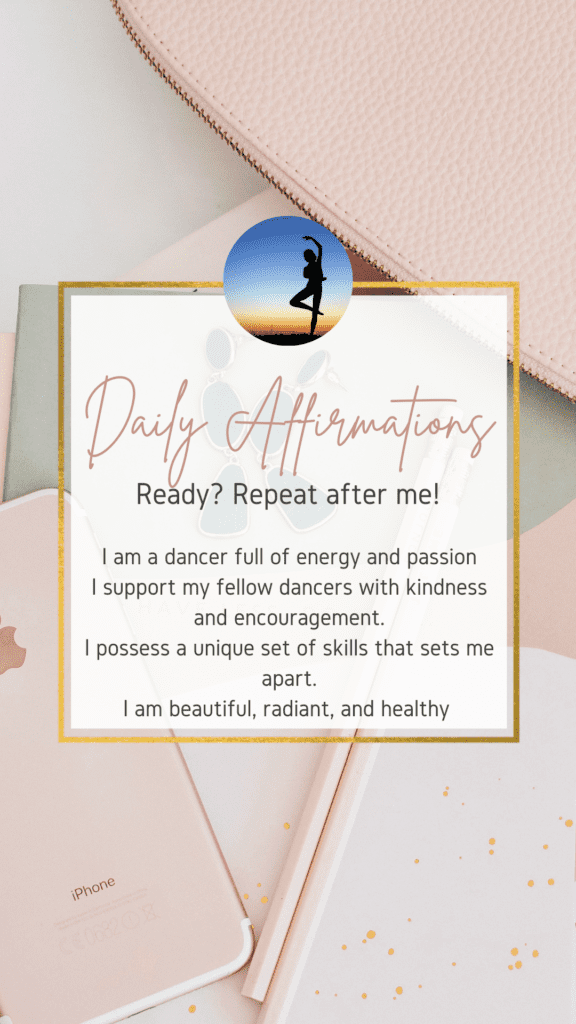
Conclusion: Positive self-talk is a powerful tool that can transform a dancer’s mindset, leading to greater confidence, resilience, and success. By making it a regular part of practice, dancers can break free from negative thoughts and create a mental environment that supports their growth. Remember, the most important conversation a dancer has is the one they have with themselves—so make it positive!